lunes, 4 de julio de 2016

The Wall

1. The boy sees masks on the faces of the people in the train. Later he sees similar masks
on the faces of the children in his fantasy. What is the meaning of that?
Both scenes intend to criticize the educational system at the time, this is one of the major
themes of the movie. In these scenes, children are shown with heavily dysmorphic faces,
with no recognizable features, as if they've been severely atrophied. This represents the
educational system's opposition to "individuality", and how it indoctrinates children into being
carbon copies of the "ideal citizen", unable to think for themselves.. They are given no
chance of expression, and are ridiculed when they show signs of individuality (such as Pink
writing poetry).

2. The riot scene ends and the camera returns to the boy in the classroom as the children
recite the lesson. Think of a possible explanation for this.
Before the riot scene, the movie shows Pink’s displeasure with the educational system,
“Another Brick in the Wall” is a critique of how violent the education process is. However,
after this we see Pink and his classmates overthrowing their vile superiors, burning down the
place they were indoctrinated at. They are, in a way, regaining control of their own lives,
overtaking the system. Sadly, this is all just one of Pink's daydreams, there was never any
riot, he is still just another part of the machine, there is nothing he can do to stop it.

3. What kind of education does the movie portray? Use the song “The happiest days of our
lives” to help you
Education is a recurring theme in the movie, and one of its biggest targets for criticism. "The
happiest days of our lives" tries to show how there is oppresion in every layer of the system,
meaning that the oppressors were once the oppressed, and they continue to be oppressed
throughout their lives by other people. We know the subject in mind are the oppressive
teachers because of how it describes their behaviour, them trying to "hurt the children in any
way they could". Then, these same teachers are shown to live miserably in oppressive
households, and everybody knows it. This is shown in the last 3 lines of the song "When
they got home at night, their fat and / Psychopathic wives would thrash them / Withing
inches of their lives". The oppressors are also oppressed, and they take out their own
frustration on their subjects, the children.
4. Education is only one of the various social institutions the movie deals with. What others
did you notice and how are they portrayed?
Besides the educational system, the other social institution the movie deals with are family
and the government, in that order. Pink's family life is turbulent to say the least. His father
died during World War II, meaning that Pink's upbringing was entirely on his mother's hands.
The song "Mother" explores the character of Pink's mother, and how her actions affected
him in his life. The song portrays her as an overprotective guardian who, perhaps
unconsciously, prevented him from expressing himself, making him afraid of the outside
world, effectively putting all of her fears into him. While overprotective, she was also an
absent mother who ignored her child's cries of help, meaning that during his childhood Pink
did not feel affection, which is detrimental to anyone's mental stability.
The other social institution shown in this movie is government. In the larger picture, the
government system has many parallels with the educational system. Thus, the scenes
showing the educational system as an endoctrinating machine could also very well be a
critique to the government, and how it uses education as a method of crowd control,
eliminating individuality to maintain control of the masses.
5. We, in Argentina, often rely on education to solve most of our social problems. We blame
education, or the lack of it, for many of them. Consider the huge success (described in the
text below) of the song “Another brick in the wall” which claims “we don’t need no education”
and compare it to what you think about education.
"Another brick in the wall" is Pink Floyd's most popular song, which sadly means that it often
gets taken out of context by listeners. The song's message can't be completely understood
when removed from it's source material, The Wall (the album). In contrary of popular opinion,
the song is not against education, it does not thrive for the destruction of the learning
process. The song attempts to criticize the oppressive nature of the educational system. The
song, and the album itself, incentivizes rebellion against the oppressive forces which we are
subjects to, and thrives for a more accepting society, one that treasures creativity and
individuality. I believe that should be our objective as a society, and what we should expect
of our educational system.
6. Up to what extent is education a way of “thought control”?
Education had changed several times during the history. I could have been harsh for some
people, but lighter for others. I strongly believe that the thought control was a decision made
by the teachers, and also consider social context. I am not against the fact that some
teachers didn’t or don’t allow freedom into their classroom but nowadays this is not usually
seen. It happened that teachers stated a strict view and policies to their students, without
letting them to freely express: It may be considered as a way of brainwashing the kids and
also control their thoughts. By so, the education would be seen as a jail of creativity.
However, nowadays education got much better than years before. Today we can express
freely in any way, and the schools also encourage the students to feel, learn and create
without overpassing the barriers of “Do nothing”.
7. Explain the meaning of the double­hammer symbol. Use the scene “In the flesh” to
answer.
A hammer could usually be shown as a symbol of fascism. The two hammers, during the
movie were shown, in an ironic way, as the Nazi emblem, including the red and black
colours in it. The scene “In the flesh” it's a full ironi that satirize Hitler, him being a fascist
dictator.
8. The children falling into the meat grinder is a visual metaphor that makes a powerful point.
What is the metaphor and what point does it make?
The whole meat grinder scene represents how Pink views the educational system. To the
tune of "Another Brick in The Wall", arguably Pink Floyd's most celebrated opus, we see
children being run through a machine, and being grinded into minced meat. This is a harsh
critique of how the educational system treats children, as if they were cattle, or "unfinished
products". During the process, they are robbed of their individuality and, eventually, they all
are turned into the same meaty blob. In this form, the system can used the now indoctrinated
children as it pleases.
9. What is the wall? Can you say whether it is a good thing or not?
Throughout the film, there are many ideas that can be attributed to the concept of “The
Wall”, some are more literal, while others have a more metaphorical meaning. “Another Brick
In the Wall” portrays the wall as the system itself, which we are a part of, perhaps unwillingly.
As we are raised, we are molded into identical bricks which are used to build the wall, our
lack of individuality obliges us to support the system. Destroying this oppressive system
would be impossible without destroying ourselves in the process. The Wall could be a
reference to the walls we build around ourselves. We isolate ourselves from the people
around us through meaningless consumerism. The importance we give to these products
results in us losing our empathy, losing our connection with the outside world, and dying
alone on this side of the wall

domingo, 3 de julio de 2016

Genética

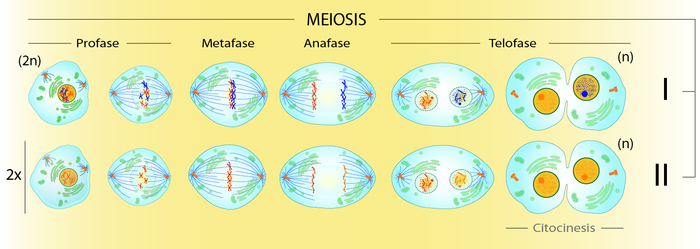
La meiosis es, básicamente, el proceso en el que las ceulas de dividen, lo cual permite la reproducción sexual. Mediante la meiosis se forman tanto los óvulos como los espermatozoides. El proceso de meiosis puede separarse en dos partes, la Meiosis I y la Meiosis II, explicadas a continuación:
https://upload.wikimedia.org/wikipedia/commons/thumb/a/af/Meiosis_mx.png/700px-Meiosis_mx.png 
Durante el proceso de meiosis, puede haber errores en la formación de los gametos, lo que causa las conocidad mutaciones genéticas. Un gameto puede tener deficiencia de genes, o estos últimos pueden estar en un orden que codifique los cromosomas erróneamente. Esto puede causar una variedad de malformaciones en un recién nacido si éste fue gestado con gametos mutados. Uno de los gametos, tanto el espermatozoide como el óvulo, podría tener un cromosoma de más (lo que provoca trisomía), o podría faltarle un cromosoma (lo que provoca monosomía). 
Dentro de las trisomías se encuentran: el síndrome de Klinefelter (XXY), el síndrome del dobe Y (XYY), y el síndrome del triple X (XXX).
La única monosomía viable en los humanos es el Síndrome de Turner (XO). Debido al importantísimo papel que cumple el cromosoma X en la formación de un individuo, la codificación YO invariablemente acaba en un aborto espontáneo.

viernes, 29 de abril de 2016

Lo hecho, hecho está...


  ...Sobre todo cuando de medio ambiente se trata. Ya llega un momento en el que ya no se pueden arreglar los daños causados a nuestro planeta, y lo único que nos queda es prevenir futuras injurias, y actuar para mitigar las consecuencias de nuestras perjudiciales acciones. Cuando se trata de estos temas, uno no puede hacerse el desentendido, y esperar que los demás lo arreglen, es necesario asumir una responsabilidad como individuo, y colaborar para mitigar estos daños. 
http://www.stratgia.com/files/images/servicios/seguimiento-mitigacion-riesgo.jpg
 En mi opinión, las grandes empresas deben ser forzadas a tomar medidas de mitigación, teniendo siempre en cuenta la contaminación que podrían causar. Aunque esto es algo que se pone en práctica, muchas veces las reprimendas por no acatar a estas medidas son demasiado leves para compañías de tanto poder económico, lo que hace a las multas tan sólo un mínimo monto de dinero que se necesita pagar. Asimismo como se toman estas medidas en las empresas, se debe concientizar acerca de estos temas entre el público, evitando el consumismo que tanto daña al medio ambiente. Métodos de mitigación deberían estar disponibles para todos, de modo que no haya sectores de la población que generen más daño que otros.

miércoles, 20 de abril de 2016

El Desarrollo Sostenible


 El consumo, y por extensión, el desperdicio, es algo inevitable para el humano. A través del consumo vivimos, existimos en constante contacto con los elementos, utilizándolos y desechando lo que sobre o lo que no necesitemos. El desarrollo humano, el constante proceso de crecimiento de nuestras capacidades tecnológicas, esta por lo tanto también ligado al consumo de recursos, y al desecho de miles de millones de toneladas de desperdicios. Sin embargo, llega un momento en que la explotación y el uso de estos recursos llegue a niveles tan desmedidos que pone en peligro a la posterioridad humana. Llegará un momento en el que la humanidad del futuro no tenga estos recursos a su disposición, y es nuestro deber como miembros de la raza humana el tratar de postergar este evento lo más posible, hasta poder encontrar alguna alternativa segura, por lo menos.


 El documental "La Huella Ecológica del Hombre" de la National Geographic expresa en el momento del cuadro de arriba cuanta agua utiliza una persona promedio en toda su vida sólo para bañarse, un total de 1000000 litros, aproximadamente.El documental continúa con más estadísticas de ese tipo, en una vida se utilizan 656 barras de jabón, 198 botellas de shampoo, 272 desodorantes, etc. Obviamente, el documental no busca movilizar el "no bañarse", el aseo es una medida higiénica importante para el hombre. El documental simplemente intenta concientizar al público sobre cuánto consumen en su vida entera, que es lo que dejaron atrás en el mundo, cual es su huella ecológica personal. En otro momento, el documental hace referencia a la totalidad de árboles que deben ser cortados en promedio para fabricar los diarios leidos por una persona en toda su vida, un total de 24 para fabricar 2455 diarios, aunque en la era actual estas estadísticas pueden no ser tan correctas. Con tan solo consumir, dejamos algo atrás, una huella que queda en el mundo. Esto no significa que debamos dejar de consumir, de ninguna manera, al fin y al cabo nuestra supervivencia es esencial para la existencia de las generaciones futuras.


 Acá es donde creo que entra la cita de la política noruega Gro Harlem Brundtland, en el tener en cuenta a nuestros descendientes, el futuro de la humanidad, y como nuestras acciones influyen en las condiciones de vida que ellos van a tener. El practicar el desarrollo sostenible no significa no satisfacer nuestras necesidades, sino encontrar la manera de hacerlo asegurándonos que las generaciones futuras también puedan hacerlo. Llegará seguramente un momento en el que algunos de los recursos que consumimos estén completamente agotados, pero es nuestro deber intentar postergar esa fecha por lo menos hasta que una alternativa segura y confiable sea encontrada.

miércoles, 13 de abril de 2016

"No pide limosna, exige justicia"


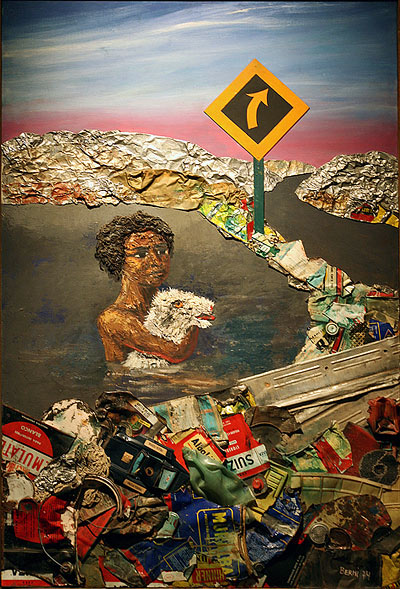
https://udlerlorena.files.wordpress.com/2013/03/juanito-bac3b1andose-sobre-lata.jpg

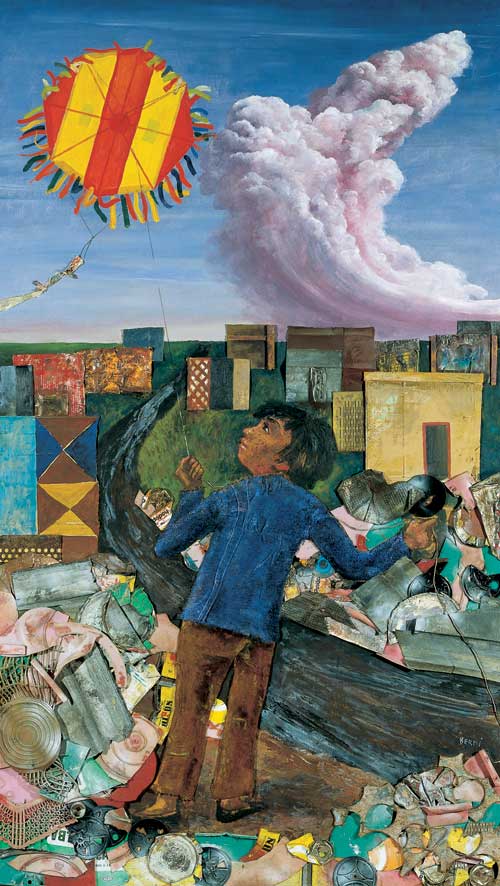
 Para Antonio Berni, el nombre Juanito Laguna actúa como representante de toda una generación de jóvenes afectados por la pobreza, forzados a vivir junto a los desechos de todo el país. A través de la estética, Berni intenta concientizar a las masas acerca de la situación de estos chicos, promoviendo la participación social. El protagonista de sus obras inspira compasión, ya que su figura está literalmente rodeada de cosas consideradas como "ya no necesitadas".

 A través de la técnica del Collage, Berni hace referencia a la situación de todos los "Juanitos Laguna", pero también puede ser tomado como una crítica a la sociedad, y lo común que es que todo sea tomado como un "producto deshechable". En primer lugar, el concepto de obsolesencia programada muestra los medios que los productores son capaces de tomar para agrandar sus ganancias. Acortarle la vida útil a los productos, con el objetivo de que estos deban ser reemplazados, es una práctica sucia, pero muy común. Esto logra varias cosas: Crea más basura de la necesaria, implanta la necesidad de reemplazar el objeto, y, por lo tanto, incentiva el consumismo.

 Ahora, el consumismo esta estrechamente relacionado con el consumo, sin embargo, el consumismo no es consumo. Como humanos tenemos necesidades básicas que satisfacer, el no hacerlo podría resultar en el deterioro físico, mental, o hasta en la muerte. Cosas como el alimento, el agua, o el abrigo son satisfactores para estas necesidades básicas, y estos son sacados de la naturaleza, y consumidos. Esto significa que el consumo es inevitable, pues el consumo significa la supervivencia. Sin embargo, el consumismo, el "consumir por consumir", puede ser evitado plenamente. Volviendo a Berni, su obra critica el consumismo, exhibiendo sus consecuencias, restregándoselas en la cara al público. Berni utiliza para sus cuadros basura que encontraba en ambientes de miseria total, una manera de mostrar la realidad en al que esta clase social baja vivía, y quienes lo causaron. Un público que consume sin límites, ayudado por las empresas que facilitan que el público consuma sin límites, todo esto causa el malestar de tantos Juanitos Laguna.

martes, 22 de marzo de 2016

Consumo vs. Consumismo

https://blogger.googleusercontent.com/img/b/R29vZ2xl/AVvXsEjhl3vjNW_D8Q5xGf0k2dBOu2I7L8846_rLJovZYzN62Fpbx1B70FnBE5k2RwSNo_PtwiZcWOrWJasK0HEru8qj9Ac39zOoaIHgX4QyK3AxmMlNy9NvmGsnjcZhPEoOXX8m7ieDn0wJvCM/s320/codigobarras.png 


 Una imagen tan provocadora como la anterior solo puede hacer pensar a uno. Pensar en nuestro estado como consumidores, que parece definirnos mejor que nuestro estado como humanos, por lo menos para algunas companías. Como si nuestro grupo social, nuestro grupo de amigos, o gente de nuestra edad fuese no mas que un target para los publicistas.
 Como consumidores, tenemos que saber cuando termina el consumo y empieza el consumismo. Hay promover el consumo responsable, y no debemos ser esclavos de lo que consumimos. Pues, al fin y al cabo, somos nosotros los que tienen el poder a la hora de elegir nuestros productos, no las companías.

viernes, 13 de noviembre de 2015

Euthanasia


Death is usually seen as something negative, sometimes death is viewed as the ultimate evil, the greatest fear of mankind. This feeling has been present in humanity since its beginnings, and naturally so, death is the biggest question, we know nothing about what happens after death, it is natural for us to fear death. This feeling of dread is so fixated with humanity itself that it is an unnatural thing to think of death as something positive. This is why so many civilizations condemn suicide, and why many people criticize euthanasia. The idea of someone wanting to die is outrageous to them. Personally, I think we must have a different approach to death, and should accept a person’s desire to die, if in great pain.
Firstly, I believe that if every person is entitled to the right to live, every person should also have the right to die. In the category of euthanasia, we must understand the extreme physical or emotional pain a person must be going through, in a way in which death (Mankind’s greatest fear) is seen as a desirable choice. If the person wishes to have a respectable death, without having to undergo excruciating pain, I believe they have the right to chose death over the torture life means to them. “Mercy-kill” is something seen in many aspects of modern media, mainly war movies or even videogames, and it isn’t seen as an act of cruelty, it is seen as an act of kindness. Is it so hard to translate that to real life, not in the middle of a fiery war, but in the environment of a hospital?
Furthermore, there is a different approach to this. In a case in which the person to be hypothetically euthanized is unconscious, or unable to express themselves, the pain resides not in the person itself, but in their family and BEloved ones. Seeing a loved one suffer for so long is emotionally draining. In some cases in which the affected person is in a coma, the family suffers the most, since they have to carry the emotional burden of knowing that this person will probably not wake up. It is damaging for the family because they are unable to mourn their loss, knowing their loved one will not wake up, or may be suffering. In cases like that, the family’s desire to euthanize their loved one should be recognized.
In conclusion, a person’s right to die if certain conditions are met should always be recognized, and in case that person is unconscious and their recovery is unlikely, it is their family the most affected, thus they have the right to decide to euthanize or not. Euthanasia should be taken with extreme delicacy, being a serious topic, and should not be taken lightly, the cases in which euthanasia is a viable option are very extreme, and difficult to analyse from an outside perspective, this is why only people involved in the cases should be able to have an influence on the choice of the person or the family.